





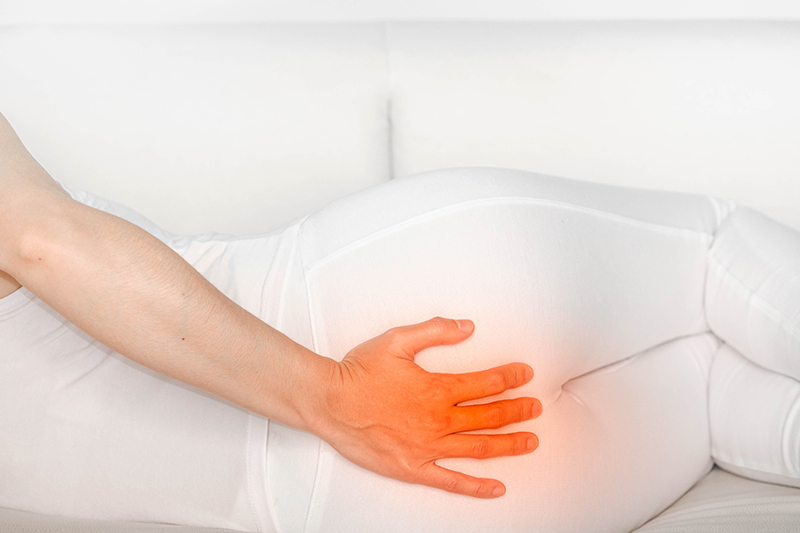
Symptoms of Coccydynia
The pain may improve with conservative care over the course of a few weeks, but it can turn into a chronic painful condition and can make it difficult to carry out daily activities or sleep. This can result in significant distress, functional limitations and decreased quality of life. This pain may be described as:
- Worse with standing for extended periods, sitting down, sexual activity, or defecating
- Dull with occasional sharp pains
- Worse when sitting on hard surfaces
Diagnosis and Treatment of Tailbone Pain
Diagnosis of chronic coccydynia is based on evaluation of the symptoms and local pain characteristics. Occasionally, the doctor may also conduct a rectal exam to better evaluate the coccyx. The doctor might also recommend an MRI or CAT scan to check for degenerative changes, a fracture, or rule out other underlying conditions.
Generally, patients with coccydynia are advised to avoid prolonged periods of sitting, and to use a coccygeal cushion (“donut” pillow) when they have to sit. In more severe cases, medications or injections may be provided. Corticosteroid injections can help to both relieve pain and reduce inflammation. These treatments are often provided in combination with physical therapy or manual manipulation of the tailbone to achieve maximum benefit.
At Orthopedic Pain Institute, we will develop a highly specialized plan to treat your individualized needs. Schedule your consultation to learn more about coccydynia and how we can help you.